For lumber yards & building material dealers
Builder plans in.
A priced framing package out.
BidLoggers reads every sheet of a plan set, asks the questions a senior estimator would ask before quoting, and returns a bill of materials priced against your own catalog — with the arithmetic shown on every quantity.
$0.10 per square foot, billed on the plans you actually run. No seat licences.
The job today
A framing takeoff is a day of an estimator's life
Someone opens a 40-sheet plan set, scales walls, counts studs, reconciles the architectural set against the structural set, then types it all into a spreadsheet and prices it line by line. Then the builder asks for a change.
Bids get turned down
Not because the yard can't win them — because there aren't enough estimator hours in the week to quote every plan set that comes in.
Errors are invisible
A missed header or a stud count off by 15% doesn't announce itself. It shows up as a short load on site, or as margin that quietly disappeared.
Nothing compounds
Every correction an estimator makes lives in one spreadsheet. The next quote starts from the same blank page as the last one.
How it works
Four steps, and you review every one
Upload the plan set
Architectural and structural, as they came from the builder. Full-size 24×36 and 30×42 sheets are read natively — no exporting, no splitting, no asking the builder for something smaller.
It reads every sheet and asks
Before quoting anything, it returns the clarifying questions a senior estimator would ask: which set governs where they conflict, what's in scope, what the plans leave open. You answer; those answers become direction.
You get a priced takeoff
Organised into the packs this design actually calls for — not a fixed template. Each line matched to a SKU in your catalog, each quantity carrying the arithmetic behind it.
Send a proposal the builder can act on
A designed PDF and a mobile quote page where the builder can review, download and accept. You see when it's opened.
Where most of the work went
The quote gets checked before you see it
Producing a number is the easy half. A bid you can send is one that has been argued with. Every takeoff goes through an independent audit that re-derives it from the plans, plus guards that refuse to let the pricing engine bind a line to the wrong product.
An adversarial second pass
A separate review re-counts studs, joists and headers from the plans without trusting the first pass, and hunts for anything the drawings require that the takeoff lacks. Error-level findings block the send until someone decides.
Identity guards
Fire-rated shaftliner must not price as a concrete forming tube because the two descriptions parse alike. Sheet goods cannot bind to a furring strip. Lumber cannot bind to hardware.
Price sanity
Every unit price is checked against what that class of material actually costs in your catalog. A connector priced like a truss package gets flagged, not quoted.
What it does
Four things that decide whether a bid is any good
Reads the set
Full-size sheets, and only the ones that matter
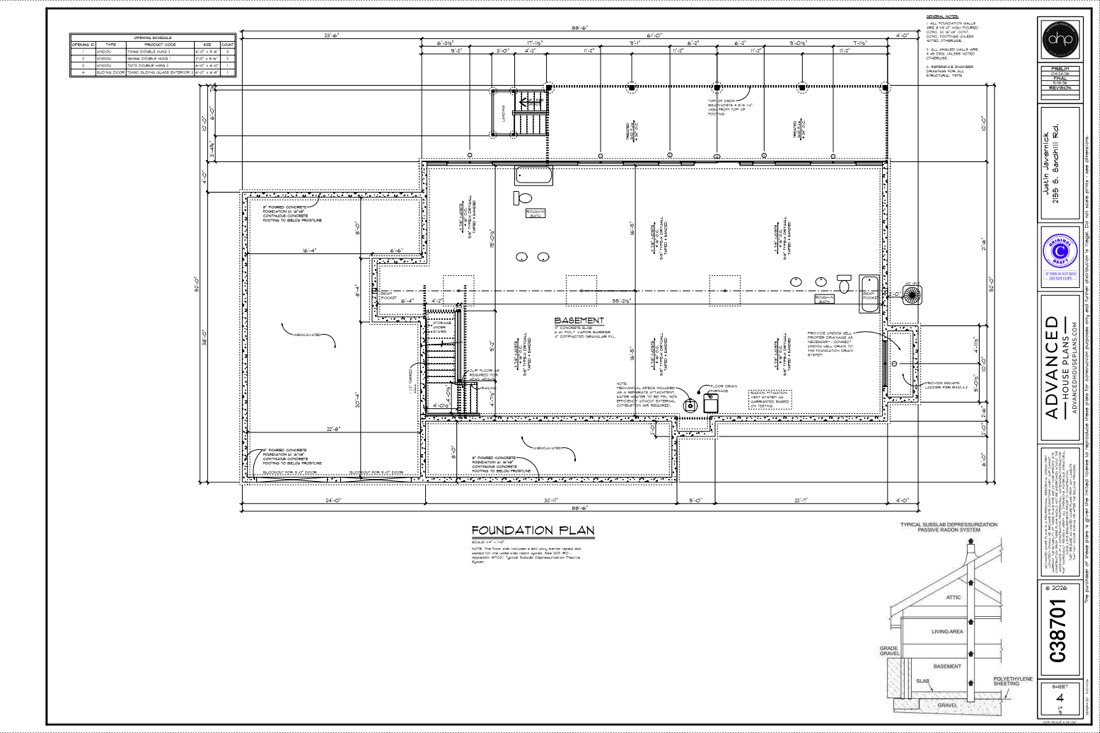
Architectural sets are 24×36 or 30×42 — most tools ask you to export something smaller. BidLoggers reads them at a resolution tuned so a wall-section fraction stays legible, then leaves out the sheets a framing takeoff never uses.
Pricing
Five cents a square foot
You're billed on the plans you actually run — not per seat, not per user, not on a contract you have to grow into. A 3,000 sq ft house costs $150 to quote.
Bring us a plan set
The fastest way to judge this is to watch it quote a job you already know the answer to. Bring one you've bid by hand and compare.